
Swimming Pool Covers
 Written byFilip De Weer — CE0October 26, 2026
Reviewed by: Leisure Pools Technical Team
Last reviewed: October 26, 2026
Choose the right swimming pool cover: summer, winter or custom automatic slatted cover. Compare the range and get advice from Leisure Pools.
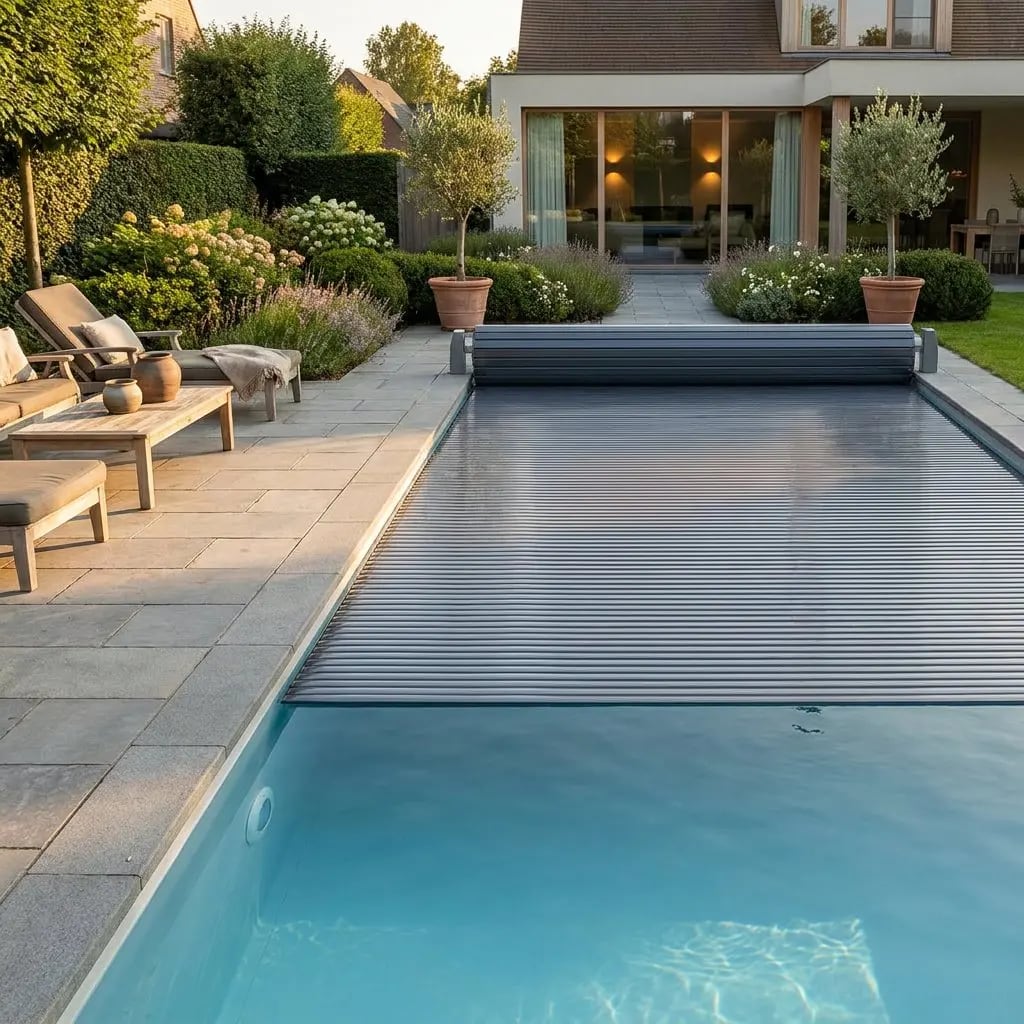
Do you want to limit heat loss, evaporation, contamination and unnecessary maintenance? With the right swimming pool cover, you get more comfort from your pool, work towards an energy-efficient pool and keep the water in top condition more easily. Here you can choose between a summer cover, winter cover and automatic slatted cover. Which solution fits best depends on your pool type, when you use it and the level of convenience you want. Browse the range or ask for advice on a custom pool cover.
Why a swimming pool cover is worth it
A good cover for your pool does more than just cover the water. It helps retain heat, limits evaporation and keeps leaves, dust and other dirt out more effectively. That means less pool maintenance, less water loss and often lower energy use for heating too. An insulating swimming pool cover also improves ease of use: your pool is ready to use more quickly. Safety matters too. A safe or child-safe swimming pool cover always requires the right type, correct dimensions and proper installation; not every cover is designed to bear loads.
Compare the main types of swimming pool cover
Type of cover
Best for
When to use
Ease of use
Insulation and protection
Safety
Budget range
Summer cover
Limiting evaporation and cooling during the swimming season
Frequent opening and closing, especially with daily use
Practical and quick, especially with a cover reel
Good support against heat loss and dirt on the water surface
Limited; not intended as a full safety solution
Lower to mid-range
Winter cover
Seasonal closure and protection against leaves, dirt and light
Longer cover periods outside the swimming season
Less focused on daily opening and closing
Strong protection for the winter period
Depends on the design and correct installation
Mid-range
Automatic slatted cover
Daily comfort, neat integration and custom fit
Frequent opening and closing throughout the season
Very high thanks to automatic operation
Strong combination of insulation, less evaporation and a neat finish
An important safety layer with the right design and measurement
Higher
Price differences between swimming pool covers usually come down to automation, choice of materials and the degree of customisation. Are you specifically looking for a walk-on, wooden, liquid or brand-specific cover? Those are separate niches. On this page, we focus on the main choices within this range: summer, winter and slatted covers.
Summer pool cover: bubble cover and solar cover
A summer cover is designed to keep your pool warm during the season and limit evaporation. Classic bubble cover is a practical choice if you mainly want to reduce heat loss and contamination. A solar cover goes a step further and uses sunlight to provide extra support for the water temperature, especially in combination with pool heating. For those who swim often, this is a convenient solution with plenty of ease of use. It does not offer the same protection as a full winter cover, though. Fit, wind and location also help determine how much effect you really get from temperature retention.
Winter pool cover and 4-season solutions
A winter cover helps limit leaves, dirt, light and evaporation when the pool is used less or not at all for a longer period. That often makes restarting in spring much easier. A separate winter cover is usually wiser than using a summer cover all year round, especially for outdoor pools that are more exposed to weather and dirt. If you are unsure between one 4-season solution or a combination of summer and winter protection, your usage pattern is the key factor. Indoor pools generally need less weather protection than outdoor pools.
Automatic swimming pool cover with slats
An automatic slatted cover works with slats that open and close in a controlled way and roll up into an integrated or visible system. This type of swimming pool cover, often chosen as a pool roller shutter, is mainly selected by those who value daily comfort, a sleek finish and fast, convenient use. A well-measured slatted cover combines less evaporation, heat retention and a neat appearance with extra safety around the pool. Performance still depends heavily on customisation, the shape of your pool and the technical configuration chosen. For intensive use, this is often the logical step up from a traditional liner cover solution.
Surface-mounted or built-in: what suits your pool?
With a surface-mounted system, the reel installation remains visible on or beside the pool, which is often interesting for existing pools or when the technology needs to remain easily accessible. A built-in version is integrated more discreetly, for example above the water, under water or built into a recess or steps, depending on the design. So this choice is not just about appearance, but also about the available space, technical possibilities and the existing pool structure.
PVC, polycarbonate or solar slats?
Within slatted systems, the material partly determines how your cover performs. PVC is often a logical choice for those looking for a solid solution with attention to budget and daily use. Polycarbonate is more interesting when extra strength, weather resistance or a different finish become more important. Solar slats can also help make better use of solar heat. So the best choice is not only technical, but depends on your intended use, desired insulation and investment level.
Which swimming pool cover suits your pool?
- Start with the type of pool: an indoor pool mainly needs control over evaporation and heat loss, while an outdoor pool also needs protection against leaves, rain and weather.
- Look at new build or an existing pool: with a new pool, you can include an integrated solution earlier in the design; with an existing pool, the current structure determines what is technically feasible.
- Pay attention to shape and dimensions: the more unusual the shape, the more important a custom swimming pool cover becomes. This applies even more to round pools and integrated systems.
- Set your priority: the best swimming pool cover is not the same for everyone. Do you mainly want insulation, extra safety, daily comfort, a sleek look or to stay within a certain budget?
- Make a distinction between custom solutions for built-in private pools and simpler covers for above-ground pools or a swim spa. This category mainly focuses on covers for built-in pools.
How to use and maintain your cover
- First remove leaves and other dirt before closing or rolling up the cover; this supports both performance and lifespan.
- Do not allow unsuitable loads to build up from standing water, snow or ice, and do not use automatic systems in weather conditions they are not intended for.
- Clean the cover with suitable products and store it correctly when it is temporarily not on the water, especially summer covers.
- In summer, you open and close it more often for ease of use; in winter, the focus is on longer cover periods and checking tension, fixings and cleanliness.
Frequently asked questions about swimming pool covers
Should I cover my pool when it rains?
During normal rain, covering a pool is often worthwhile because it helps limit extra dirt, cooling and evaporation. In heavy rainfall, storms or high water loads, the answer depends on the type of cover and the way water can drain away or be collected. So always check what is suitable for your specific cover and situation.
How can I waterproof my pool?
A swimming pool cover does not make a pool watertight. It limits evaporation and contamination, but it does not solve a leak in the shell, pipework or sealing. If your pool is noticeably losing water, you need to have the structure, finish and technical installation checked. So the cover helps with preservation, not with restoring watertightness.
What is the best material for a pool cover?
There is no universally best material for a cover. The right choice depends on the season, ease of use, insulation needs and budget. For summer use, bubble covers and solar solutions are popular; for winter protection, you are more likely to choose a denser cover, and with slatted systems, PVC, polycarbonate or solar slats each play their own role.
Should the bubbles of a bubble cover face up or down in a pool?
With a bubble cover, the bubbles normally face down, so on the water. This helps the cover fit better and supports its performance for heat retention and evaporation. Trim the cover neatly to size, roll it up correctly when you swim and do not leave it lying in full sun next to the pool longer than necessary. That helps the cover keep performing well for longer.
Browse the range and choose your cover
Do you already know which direction you want to go in: summer, winter or automatic with slats? Then browse the range and compare the technical options for each type. If you are still unsure between ease of use, safety, insulation or finish, have a custom solution worked out based on shape, dimensions and usage needs. You can then view the technical information and immediately request a free quote or personal advice.

Ready to start building your dream swimming pool?


