How to Clean a Swimming Pool Waterline
 Written byFilip De Weer — CE0November 24, 2026
Reviewed by: Leisure Pools Technical Team
Last reviewed: November 26, 2026
Find out how to clean a pool waterline safely, choose the right waterline cleaner for your pool and help prevent new grease, limescale or metal marks.
How to Clean a Swimming Pool Waterline
Build-up on the waterline rarely consists of just one type of residue. It is usually a combination of oils, sun cream, dust, pollen and skin residue, sometimes combined with limescale or metal deposits. As a result, not every cleaner works equally well, and cleaning too hard or too aggressively can put unnecessary strain on the pool surface.
The safest approach is therefore simple: first identify the type of build-up you are seeing, then clean it with a suitable product and finally follow targeted maintenance tips for your pool to help prevent the edge from becoming dirty again too quickly. This keeps the waterline tidy without more scrubbing than necessary.
Why build-up collects at the waterline
The waterline is where floating debris comes together. Oils, sun-care products, pollen and fine dust remain partly on the surface and attach themselves precisely at the transition between water and air. Wave action, evaporation and a changing water level make that area even more visible.
Rapid build-up is not only about visible dirt. The pool pH level, skimmer performance and filtration also play a part. If surface debris is not removed smoothly, it keeps circulating for longer and can settle more quickly. So before cleaning, first look carefully at the type of build-up: greasy and dark, rough and limescale-like, or rather brown/orange discoloured. That difference determines which approach is safe and effective.
Cleaning the waterline safely, step by step
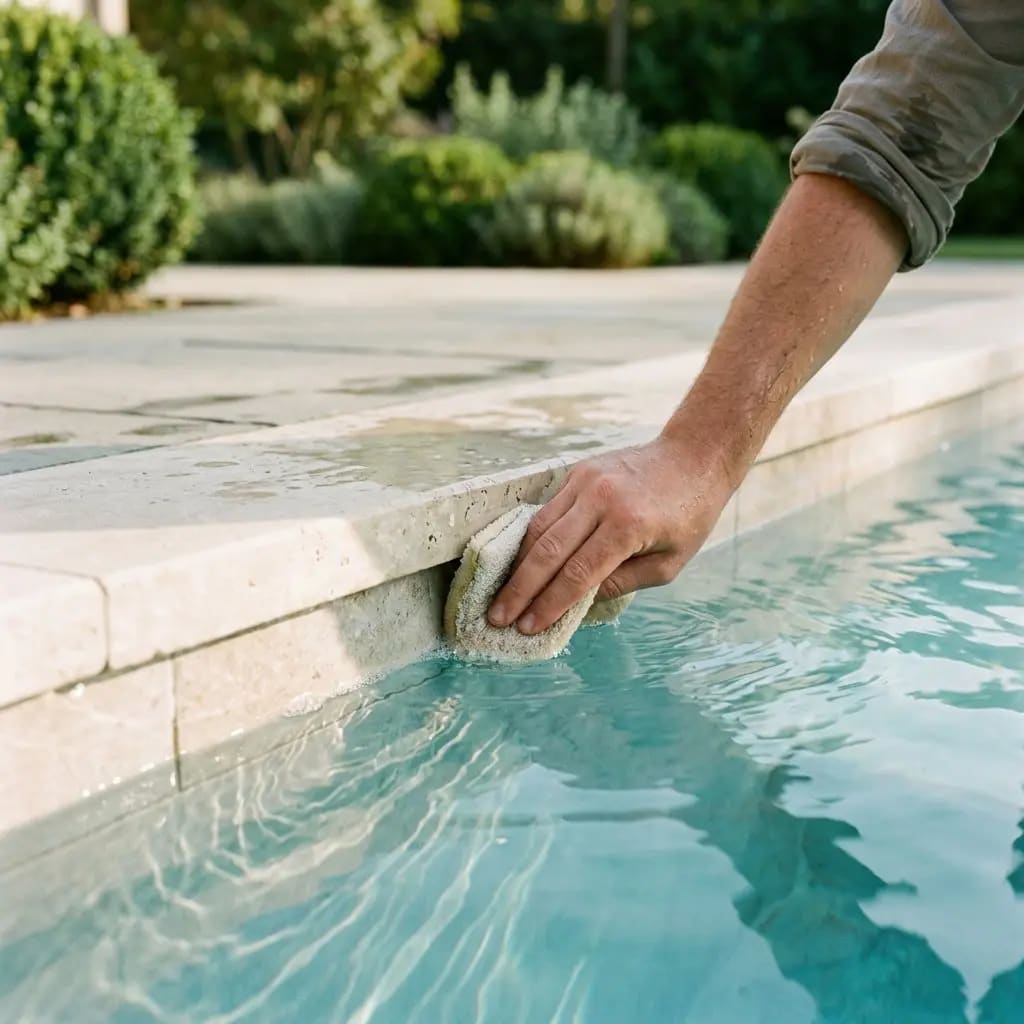
- Use a soft sponge or microfibre cloth and work in small sections, so that the product does not remain on the surface for too long.
- Always start gently: choose a cleaner that is suitable for swimming pools and for the surface of your pool shell. This allows you to clean your pool waterline without unnecessary risk of dull patches or scratches.
- Only make the treatment more targeted if the first clean is not enough. Avoid immediately resorting to stubborn scrubbing or the use of aggressive household products.
- Clean with calm, repeated movements rather than applying force. This usually works better, especially on premium finishes.
- Afterwards, rinse with clean water, check the water level and review the basic pool water parameters. This reduces the chance of new build-up forming again quickly.
Which cleaner is right for grease, limescale or metal marks?
If you want to clean a swimming pool waterline, it is best to choose the product according to the type of contamination. Always test a product first on an inconspicuous area and follow the product specifications for your pool surface.
Type of build-up
What it looks like
Suitable approach
Better to avoid
Oils, sun cream and dust
Dark or sticky edge
Pool-safe waterline cleaner with a soft sponge or cloth
Abrasive products, hard brushes and aggressive all-purpose cleaners
Limescale deposits
Rough, pale or white build-up
Pool-safe limescale remover suited to the surface
Excessive scraping or products not intended for swimming pools
Metal discolouration
Brown, orange or sometimes greenish marks
Targeted treatment for metal deposits, matched to the water and finish
Combining cleaners at random or using products that may react undesirably with pool chemicals
How to prevent new build-up on the waterline
- Keep pH, alkalinity and calcium hardness stable according to the recommended values for your pool. This helps limit limescale lines and adhering dirt.
- Ensure a correct water level, a properly working skimmer, sufficient filtration time and regular pool filter cleaning. Surface debris is then removed more quickly instead of settling on the edge.
- Wipe the waterline lightly every week. A short maintenance routine often prevents light contamination from turning into stubborn build-up.
- Use a cover when the pool is not in use, so that dust and pollen are less likely to accumulate.
- Limit oily products around the pool and preferably shower beforehand. This reduces the amount of oils and cosmetic residue in the water.
When a maintenance check is wiser than extra scrubbing
Not every dirty waterline is a cleaning problem. Rough limescale build-up, recurring brown or orange discolouration and dull patches often point to more than superficial dirt. If the build-up returns quickly, the surface starts to become dull or the cause is likely to lie in water chemistry, filtration or product compatibility, extra scrubbing usually makes little sense.
In that case, a maintenance check is often the wiser option. A targeted assessment of water values, filtration and the products used can help prevent further deterioration. In the case of recurring or stubborn build-up, Leisure Pools Benelux can support you with pool maintenance and maintenance advice, so that your pool remains technically balanced and you can continue to enjoy it with peace of mind.

Ready to start building your dream swimming pool?