
Chlorine or Saltwater Pool
 Written byFilip De Weer — CE0October 15, 2026
Reviewed by: Leisure Pools Technical Team
Last reviewed: October 15, 2026
Saltwater vs Chlorine Pool: the differences in comfort, maintenance, pH, saltwater systems and converting from chlorine to salt.
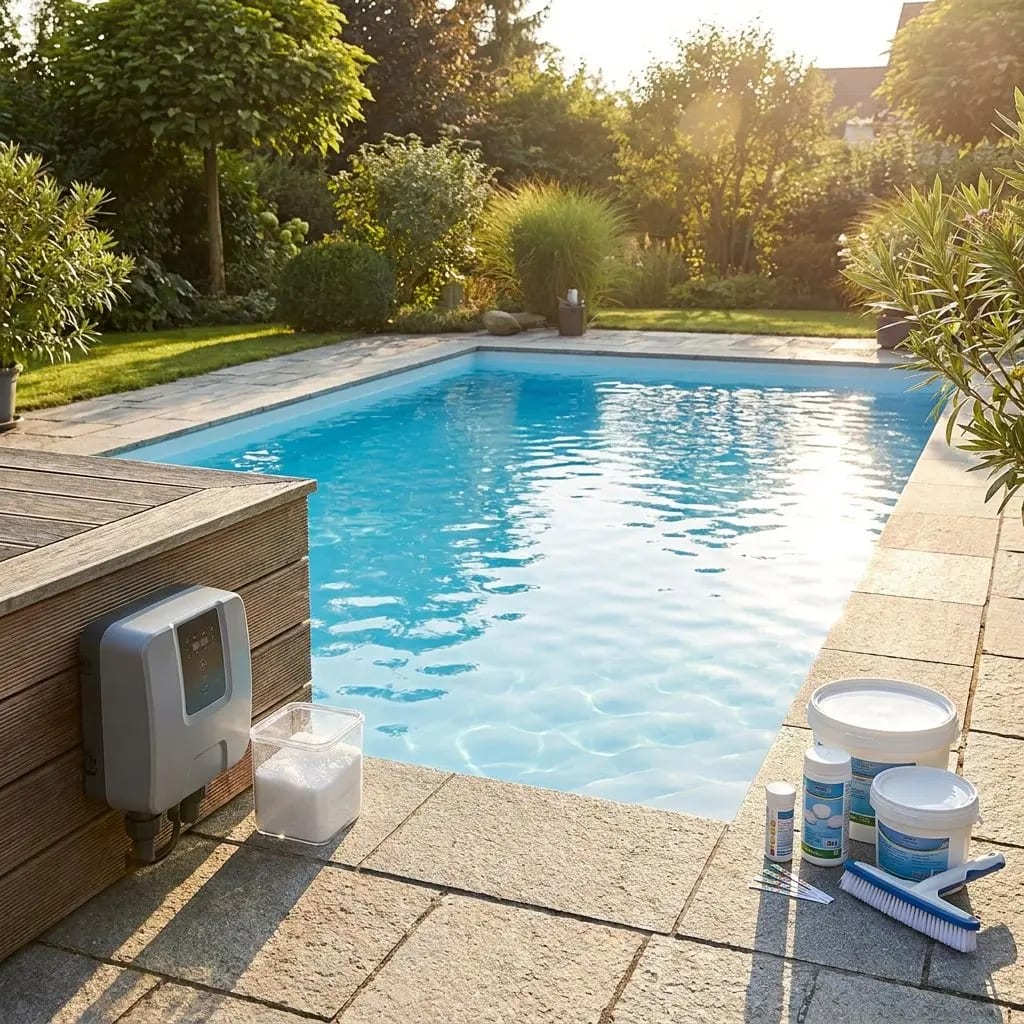
The short version is simple: neither system is automatically better. A traditional chlorine pool is easier to get up and running and requires less equipment. A pool with a saltwater chlorination system often offers more comfort and more stable water treatment. Important to know: a saltwater pool is not chlorine-free. The system produces its own active chlorine from salt. So the right choice depends on your budget, your sensitivity to smell or irritation, the pool materials, and whether you are buying a new pool or want to convert an existing one.
The real difference lies in the way the water is disinfected
In a chlorine pool, you add the disinfectant directly, for example with tablets, granules or liquid chlorine. In a pool with saltwater chlorination, you first add sodium chloride, after which an electrolysis cell produces active chlorine from it. In both cases, the goal remains the same: to keep bacteria, algae and organic debris under control. The difference lies mainly in ease of use and the technical operation of water treatment. A saltwater pool also does not taste like seawater, because the salt concentration is much lower. Salt and chlorine are therefore not true opposites. In a saltwater pool, chlorine is still present, but it is produced on site.
Benefits and considerations of a saltwater pool
Why many people choose saltwater chlorination
A pool with saltwater chlorination is popular with families and buyers who value comfort. Because the system continuously produces small amounts of chlorine, the levels often stay more stable than with manual dosing. You usually notice this in fewer peaks and dips, less strong odour and less need for daily intervention. For people with sensitive skin or easily irritated eyes, salt water often feels more pleasant. This is especially attractive with a new pool, because you can tailor the entire installation to a salt system from the outset.
Where the main disadvantages lie
The downside is that a saltwater pool requires more technical attention. The salt cell wears out, must stay clean and only works properly at the right salt and pH levels. Corrosion is also an important point to consider. Heat exchangers, ladders, fittings and other metal components must be suitable for salt water. In addition, pH rises more quickly in many salt systems, which means you need to correct it more regularly or use automatic pH control. And although a saltwater pool is often seen as low-maintenance, it is not maintenance-free. Testing, filtration and cleaning remain necessary for good pool maintenance.
Benefits and considerations of a chlorine pool
Why chlorine remains popular
A chlorine pool remains a logical choice if you are looking for simplicity and flexibility. The installation is usually less complex and getting started is often more accessible than with a saltwater pool. Chlorine products are widely available and let you correct quickly if the water needs extra disinfection, for example after hot weather, lots of swimmers or the first signs of algae. For smaller pools, seasonal pools or buyers who prefer to keep the technology limited, traditional chlorine is still a practical solution.
What to pay extra attention to
A chlorine pool involves more manual work. Sun, rain, temperature and use all have a major effect on the chlorine level, so fluctuations happen more quickly. If pH and chlorine are not well balanced, the water can smell stronger and skin and eyes can react more quickly. Storing and using chlorine products safely also requires attention. For many pool owners, that is not a problem, but anyone mainly looking for convenience and the most stable water quality possible often finds manual chlorine treatment more intensive than a well-adjusted saltwater chlorination system.
Maintenance in practice: pH, chlorine and water balance
Whether you choose salt or chlorine, clear and safe pool water starts with good water balance. The ideal pH is usually between 7.2 and 7.6. If it is too high or too low, disinfection works less well and the risk of irritation, limescale or corrosion increases. So a saltwater pool also needs the correct chlorine level. No system compensates for insufficient filtration of pool water or too little monitoring.
- Use practical maintenance tips for pool water and test pH and free chlorine regularly, and more often in hot weather, rain or heavy use.
- Clean the filter, skimmers and waterline, because chemistry alone does not keep a pool clean.
- With saltwater chlorination, also check the salt level and whether the cell shows limescale.
- With traditional chlorine treatment, only use products intended for swimming pools.
If a saltwater pool turns green, that is usually not caused by the salt itself, but by too little active chlorine, incorrect pH or insufficient filtration. In practice, the same applies to a traditional chlorine pool.
Switching from chlorine to salt
Switching from chlorine to salt is often perfectly possible, but not every pool is suitable without preparation. First check whether the installation can withstand salt water. Think of the heat exchanger, metal fittings, ladder, pump components and any steel walls. Older or non-salt-resistant parts in particular can corrode faster. In existing chlorine pools, cyanuric acid is also a point to watch. If you have used stabilised tablets for a long time, there may be too much stabiliser in the water. In that case, disinfection works less efficiently, even after switching to salt, and partial water replacement is often necessary.
- Test pH, free chlorine and cyanuric acid before changing anything.
- Check whether the heating system, fittings and metal parts are suitable for salt water.
- Have an electrolysis cell installed, preferably with a bypass and, if desired, with pH control.
- Add suitable pool salt according to the manufacturer's guideline.
- Set up the system and check the water readings more often during the first weeks.
If you have not yet bought a pool, it is wise to take this choice into account during the design phase. If you choose a pool with saltwater chlorination from the start, you can match the materials and equipment to it straight away and avoid a more complex conversion later.
Which choice best fits your situation?
The best choice depends less on a general rule and more on how you want to use your pool. Salt is often a better fit for anyone who swims a lot, values comfort, is sensitive to smells or irritation, and is willing to invest more in technology. Chlorine is often a better fit for anyone who wants to keep the entry simpler, wants less extra equipment, and does not mind testing and dosing more regularly.
- Choose salt if comfort, stable water chemistry and ease of use are important to you.
- Choose chlorine if you want a simple installation and maximum flexibility in dosing.
- When choosing a new pool, think not only about the shell, but also about the water treatment you want.
For buyers of a new pool, that last point is often the most important lesson. It is best not to decide between chlorine or salt only afterwards, but together with the technical setup of the pool.
Frequently asked questions
Is a saltwater pool chlorine-free?
No. A saltwater pool produces its own active chlorine from salt through salt electrolysis. So you add fewer separate chlorine products, but you still need to check the chlorine level and the pH of the pool water.
What are the disadvantages of a saltwater pool?
The main disadvantages are the higher initial investment, possible corrosion of unsuitable metal parts, wear of the salt cell and the need to keep monitoring pH and salt level carefully. The system is comfortable, but not maintenance-free.
Is salt better for skin and eyes than chlorine?
Many swimmers experience salt water as softer and less irritating. That is mainly because levels are more stable and there are fewer strong chlorine peaks. Even so, a saltwater pool can also cause irritation if the pH or chlorine level is not right.
What is the ideal pH level for a pool?
For most pools, the ideal pH is between 7.2 and 7.6. In that range, disinfection works best and the water stays comfortable. If the pH is too high or too low, the risk of irritation and water problems increases.
Can I convert any chlorine pool to salt?
No, not without checking first. The switch depends on the compatibility of the heating, fittings, metal parts and pipework. Cyanuric acid from earlier chlorine products can also play a role. A technical check beforehand is therefore important.
Is salt cheaper than chlorine in the long term?
It can be, but it is not a fixed rule. A salt system usually requires a higher investment at the start, while the ongoing need for separate chlorine products is often lower. The total cost depends on use, maintenance and the pool's technical equipment.

Ready to start building your dream swimming pool?


