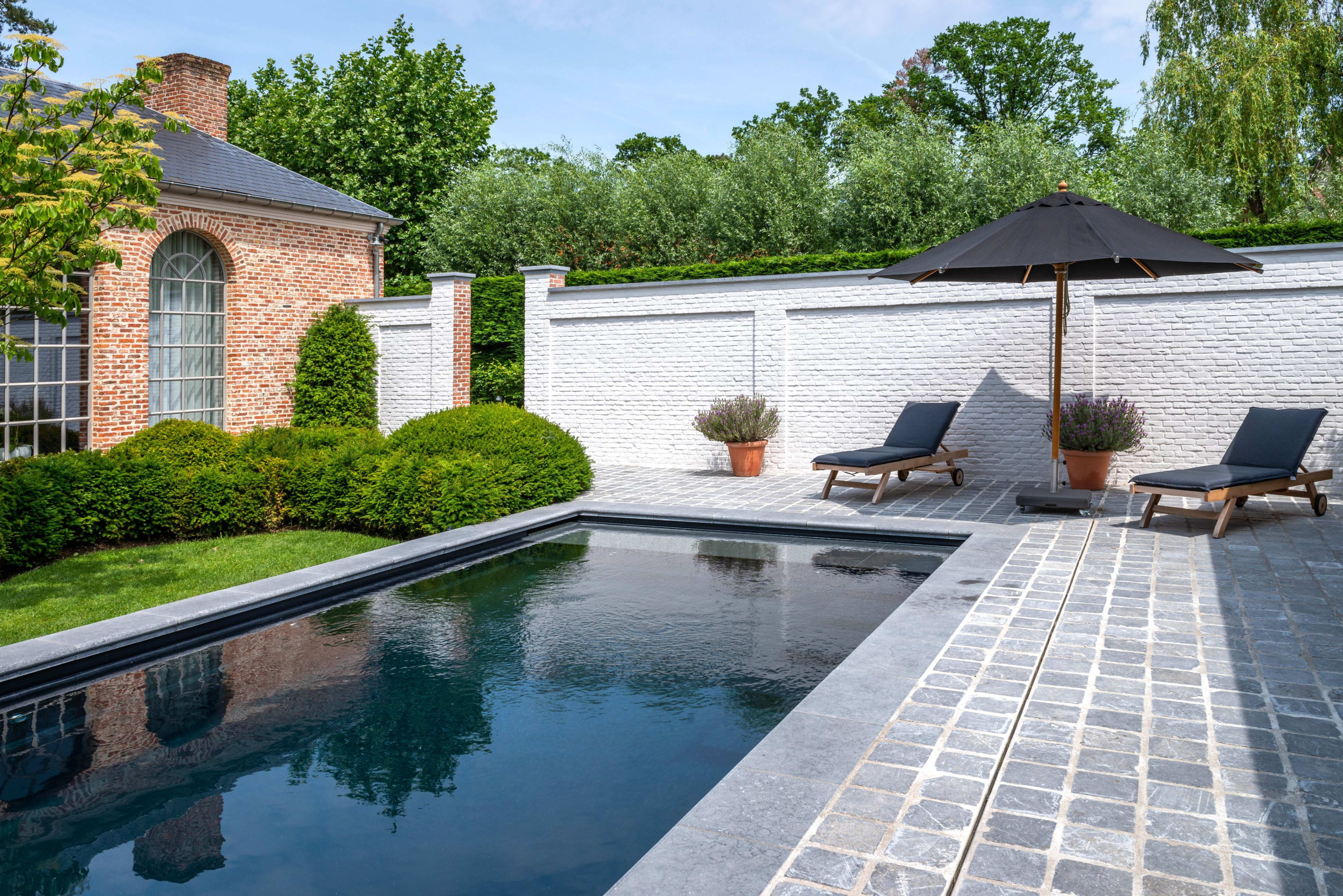
How to Keep Leaves Out of Your Swimming Pool
 Written byFilip De Weer — CE0November 3, 2026
Reviewed by: Leisure Pools Technical Team
Last reviewed: November 3, 2026
Learn how to keep leaves out of your swimming pool, which cover works best, and what to do about stains, cloudy or green water after leaf fall.

Keeping leaves out of your swimming pool starts with prevention. A well-chosen cover, fitted in time and used correctly, keeps most leaves out, especially in autumn, after rain and on windy days. That matters more than it may seem: leaves that keep floating or sink to the bottom bring in extra organic debris, can upset the water balance, feed algae and put extra strain on the skimmer or pump. In this article, you will read both how to prevent leaves and what to do if they are already in the water, including tips for stains, cloudy water and green water.
Why leaves cause problems so quickly
Leaves may seem harmless, but they quickly cause extra pollution in pool water. As soon as organic material gets into the pool, the sanitiser has to work harder and the water balance is disrupted more quickly. Leaves that are left in the pool eventually sink to the bottom, break down and release substances that can encourage cloudy water and algae growth.
That is not all. Rotting leaves can leave yellow-brown tannin stains on the pool lining, and in pools with a liner those discolourations can be even more visible. Twigs and leaf debris also build up easily in the skimmer, the filter circuit and dead spots, which makes circulation less effective. So removing them quickly is not only neater, but also better for your water and equipment.
Which cover works when?
Not every cover protects in the same way. This overview makes the differences clear.
Cover
Large leaves
Fine debris
Rainwater
Light
When is it especially useful?
Leaf net
Good
Limited
Allows through
Allows through
During peak leaf fall and as quick seasonal protection
Bubble cover
Limited
Hardly
Allows through
Allows through
At night and during short periods without use, mainly to reduce heat loss
Solid winter cover
Very good
Good
Depends on the type
Strongly reduced
In autumn, during rainy periods and when the pool is used less
If you mainly want to retain heat, covering the pool at night is often worthwhile. If you really want to keep leaves out, especially in rain and while getting your pool ready for winter, then a solid cover offers the strongest protection, provided it is fitted in time.
How to use a cover without extra leaf build-up
A cover, such as a pool roller shutter, only really works well if it sits correctly and is opened properly.
- Make sure there is enough overlap on all sides. Take coping stones, walls, outdoor showers or other fixed obstacles around the pool into account, so that no open areas are left where leaves can blow underneath.
- Tension the cover evenly and make sure it has enough slope for drainage. This prevents sagging and puddles, so leaves are less likely to stick when wet or slide together towards the middle.
- Preferably remove leaves while they are still dry. A soft tool, a leaf net or a light blower is usually gentler on the material than pulling hard or scraping.
- Only open the cover after the dirt has been removed from it. If you leave leaves on it, they will still end up in the pool when rolling it up or lifting it.
What to do around the pool to reduce leaf fall
- Keep the patio, pool edge and lawn free of loose leaves. What lies on the ground will sooner or later blow into the water.
- Prune nearby trees and shrubs and provide shelter from the wind where needed. Check especially quickly after strong wind or a storm.
- Empty the skimmer baskets in good time and also check corners and edges. Covering the pool reduces maintenance, but it does not replace regular pool maintenance.
Are there already leaves in the water? Deal with them in this order
Work from coarse to fine and as calmly as possible, so debris does not start floating through the whole pool again.
- First remove all floating leaves with a net before they can sink.
- Then remove the leaves from the bottom with a deep bottom net, without moving too wildly, before continuing with cleaning the pool floor.
- Only then vacuum up fine residue and sludge with a vacuum or pool robot.
- Finally, empty the skimmer basket, check that the water flow is clear again and see whether cleaning the pool filter is needed.
Stains, cloudy water and green water after leaf fall
Yellow-brown leaf stains are often caused by tannins. Light discolouration can fade over time with sunlight and normal water treatment, but take care with stubborn stains. Aggressive local scrubbing or using strong products directly on a liner or other lining can actually cause discolouration or damage.
If the water has turned green or cloudy, that usually points to extra organic load. Removing visible debris is then only the first step; after that, filtration, circulation and water parameters need to be brought back in range. Completely replacing the water in a permanent pool is usually not the first solution. With small pools, changing the water is more often part of normal pool maintenance.

Ready to start building your dream swimming pool?