
When should you cover your pool?
 Written byFilip De Weer — CE0November 5, 2026
Reviewed by: Leisure Pools Technical Team
Last reviewed: November 5, 2026
Cover your swimming pool whenever no one is using it, especially at night. Learn when to use a summer or winter cover and what it helps with.
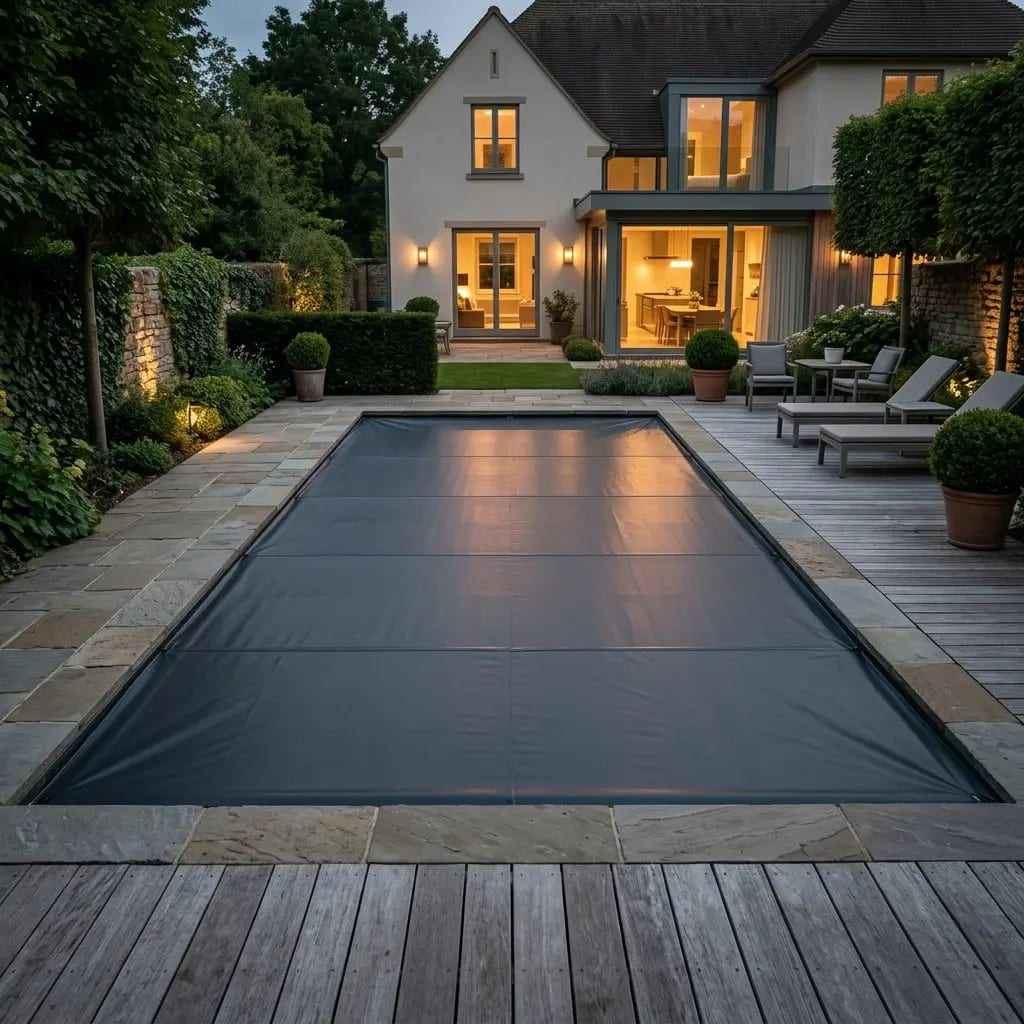
The short answer: cover your swimming pool whenever no one is swimming. It makes the biggest difference at night in particular, because that is when the water loses heat fastest through the surface. Covering it during the day is also a smart move as soon as no one is in the pool.
The right moment does depend on the type of cover. You use a summer cover during the swimming season between swims; you install a winter cover at the end of the season, as part of winterising your swimming pool, to keep the pool protected until spring start-up.
There are important exceptions too: never swim with a thermal cover on the pool, and after a shock treatment leave the swimming pool uncovered temporarily, in line with the guidelines for the product used.
The main rule: cover it as soon as no one is swimming
Are you looking for a simple rule for when to cover a swimming pool? Then keep it simple: as soon as no one is swimming, put the cover on. This limits heat loss, keeps more dirt out of the water and often helps the pool stay more stable overall.
Night-time matters most. That is when the water cools down fastest, especially in wind or cooler outdoor air. A suitable summer cover can therefore safely go back on the water every evening. It is also useful during the day if the pool will not be used for a few hours or longer.
Important: before you swim, remove the cover completely from the pool. That makes swimming more comfortable and helps prevent unnecessary strain or damage to the material.
Why covering is usually smarter than leaving it open
A cover does not actively heat your swimming pool. It mainly works by slowing heat loss, especially through evaporation and cooling at the water surface. That is exactly where a surprising amount of energy disappears: the water surface is where the biggest gains can be made.
That is why covering is often smarter in practice than leaving it open. You lose less water through evaporation, fewer leaves and less dust blow into the pool, and the water balance usually stays more stable. As a result, you often need to correct the water treatment less than with a pool that stays open all the time.
A cover is also useful for saving energy with your swimming pool, but it is important to look at it realistically. It can help reduce heating consumption because less heat is lost. Total annual electricity consumption also depends on the pump, any heat pump or other heating, the size of the pool and how intensively you use it.
In short: a heat pump creates heat, a cover helps keep that heat in. That combination is usually more interesting than heating while the water remains unprotected.
Summer cover, winter cover or slatted cover: this is the right time
Not every cover belongs on your swimming pool at the same time. This overview helps you choose based on season, use and purpose.
Type of cover
When to install?
Main purpose
Important to know
Summer or bubble cover
During the swimming season, whenever no one is swimming; especially in the evening and at night
Limit heat loss and evaporation, and also help keep out dirt
Intended for rest periods between swims, not for closing the pool for winter
Winter cover
At the end of the season, when the pool is being winterised
Limit dirt, light and weather effects and make spring reopening easier
Greatly helps with protection, but on its own does not determine how the filtration or installation operate in winter
Slatted cover
Daily and throughout the season, each time after use
Comfort, better heat retention and less evaporation
For winter use, suitability depends on the system and its design
Bar cover
Handy for daily use or longer periods without use during the season
Close off the pool and limit debris
Check for each version whether it is also intended for the shoulder season or winter
So how long a pool pump runs in winter is not determined by the cover alone. It depends on your winter strategy, the installation and the instructions for your pool.
How the cover should lie on the water
A cover only works properly if it lies correctly on the water. Pay attention to these practical points:
- Let the cover float on the water rather than hanging tightly above it. That way it seals the surface better and limits heat loss and evaporation more effectively.
- Cover as much of the water surface as possible. The less open water remains visible, the greater the effect.
- If you are using a bubble cover, place it with the bubbles facing down. That gives the best contact with the water and helps the material last longer.
- For larger pools, a roller shutter for your swimming pool makes daily use much easier. You can open and close it more quickly, while at the same time reducing the risk of tears, dragging over the pool edge or other damage.
A cover helps, but it does not replace filtration and water treatment
A cover helps, but it is not a miracle cure. It can limit dirt, light penetration and therefore algae growth too, but green pool water will not become clear again on its own by simply covering the pool.
If the water is already green, you need to look at the basics: correct water balance, the right disinfection and sufficient filtration. Only when those three work together will the water become clear and stable again.
Not all covers have the same impact either. An opaque winter cover usually helps more against light and algae growth than an open or water-permeable version. So see covering as a smart part of good pool maintenance, not as a replacement for filtration and water treatment.
At the change of season: clean, dry and store correctly
If a cover is being removed temporarily, it pays to handle that thoughtfully. That helps prevent small damage from turning into unpleasant surprises while in storage and at the next installation.
- Remove it at the right time. That is usually at the change of season, during prolonged non-use or when you switch to another type of cover, for example from a summer cover to a winter cover.
- First check the condition of the material. Inspect it for wear, damaged edges, loose seams, attachment points and parts that move stiffly or are warped. Small damage is easier to repair before storage than just before a new season.
- Clean the cover thoroughly. Remove leaves, sand and deposits, and rinse off remaining dirt or water-treatment products. The cleaner it is when stored, the smaller the risk of stains, unpleasant odours or accelerated ageing.
- Let everything dry completely. Never store a cover away for a long period while it is wet. Trapped moisture can damage the material and makes mould or odours much more likely.
- Prefer rolling it up rather than folding it sharply. That reduces creases, stress points and tears. This helps it keep its shape better, especially with thermal covers and larger sizes.
- Choose a dry, ventilated and protected storage place. Avoid places where the cover lies in full sun for long periods, rubs against sharp edges or stays in contact with heavily chlorinated water. Storing it correctly noticeably extends its lifespan.

Ready to start building your dream swimming pool?


